Citations
A citation is the observable output of everything else in AEO. Content structure, schema and third-party coverage are all inputs you can only hope are working; a citation is proof that a model actually used your brand when a real question was asked.
There are three kinds, and they are worth telling apart. A quoted citation lifts your wording more or less intact. A referenced citation names you as a source and links to the page. A plain mention names your brand with no link at all — common when ChatGPT answers from training data without searching. All three count as visibility; only one sends traffic.
The difference from a backlink is fundamental. A backlink is a permanent object you can count. A citation is generated fresh every time and can differ between two identical questions asked a minute apart, because these systems are probabilistic by design.
That variability is why citations have to be measured as a rate across many runs. A single answer that names you proves almost nothing; a consistent rate across eighty of them proves a great deal.
A citation is the only direct evidence that an AI platform is actively using your brand when it builds an answer. Rankings tell you where a page sits in a list; citations tell you whether a model chose you when a real person asked a real question. Every other AEO metric is ultimately trying to predict this one.
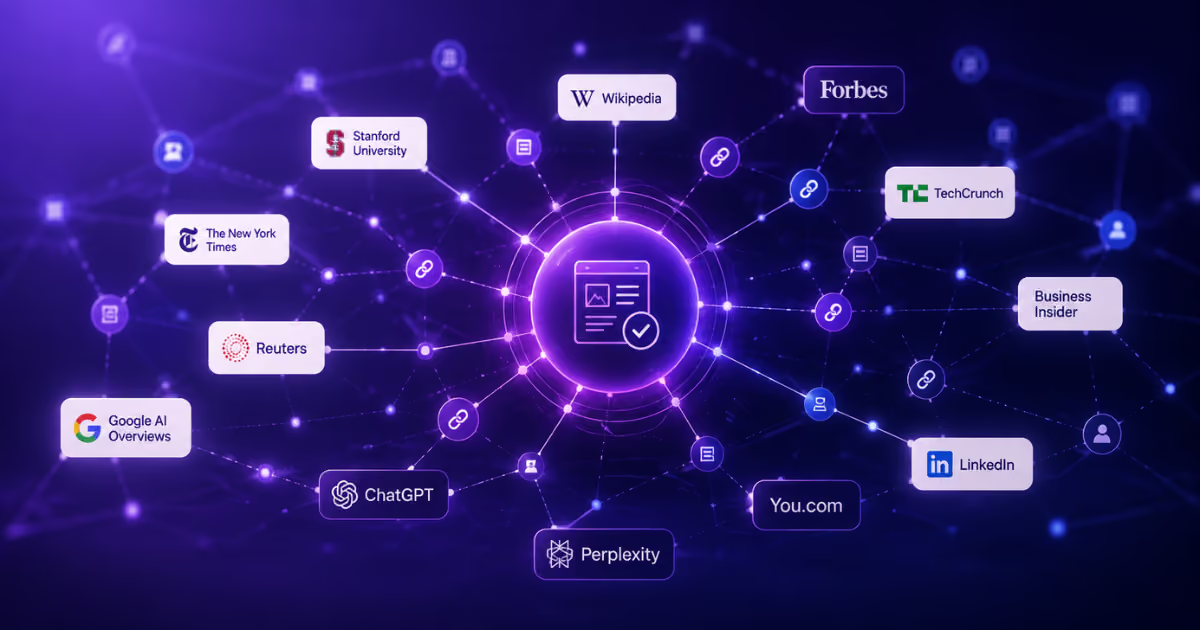
Perplexity answers a question about AEO tools and lists five numbered sources, one of which is your glossary page — a referenced citation that also sends a visitor. ChatGPT, asked the same question, names your brand in a sentence with no link at all, because it is answering from what it already knows. Both are citations. Only the first will ever appear in your analytics.
What is Citation Rate?
The percentage of analysed AI answers where your brand actually appears. Show up in 17 of 80 answers and your citation rate is roughly 21%.
What counts as a "citation" in LazyCats AI?
Any instance where an AI platform names your brand in a response, with or without a clickable link. That's the difference from a traditional backlink.
What are citations, and how are they different from backlinks?
A citation is any mention of your brand by an AI platform, with or without a link. A backlink is a hyperlink — one drives AI visibility, the other SEO.
Can I see the actual AI answers behind my score?
Yes — the citation map shows which sources were cited for which queries, per engine, so you can see what the engines drew on rather than take it on faith.
How is the visibility score calculated?
Four inputs, combined into a single 0-100 figure: mention rate, citation rate, prompt coverage and source authority. Citation and coverage dominate.